


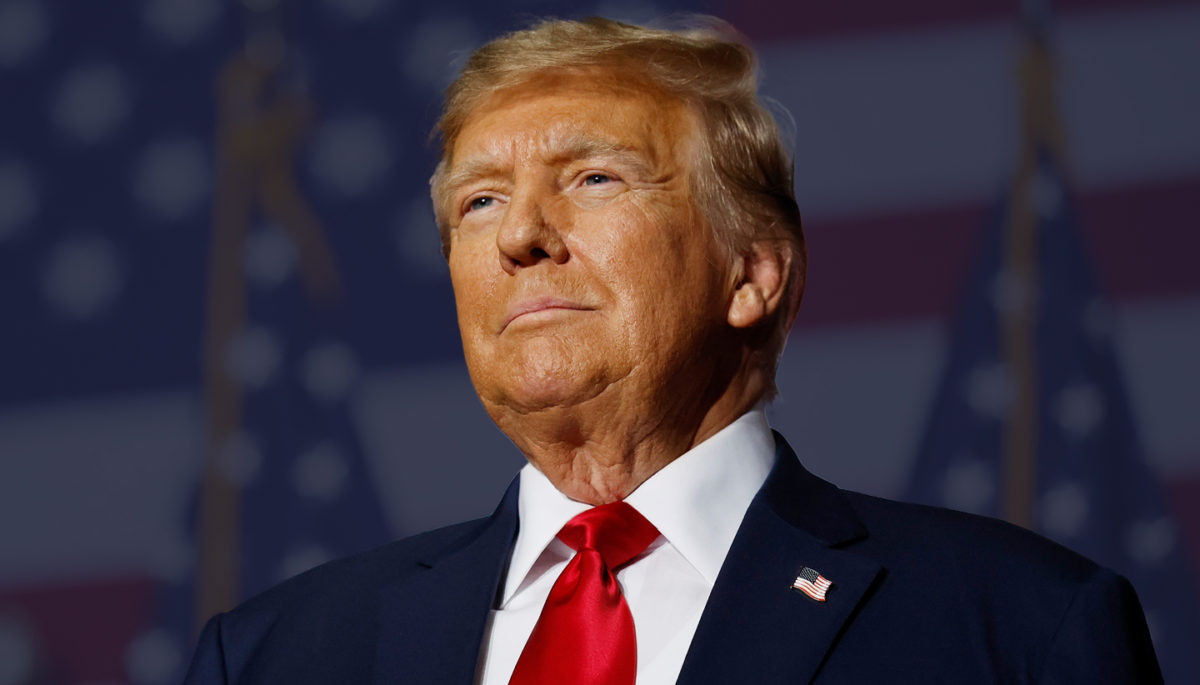
President Donald Trump is set to announce a sweeping reciprocal tariff plan early next week, escalating his push to reshape global trade in the U.S.’s favor.
The move, which he revealed Friday during a meeting with Japanese Prime Minister Shigeru Ishiba, aims to match the tariff rates that trading partners impose on American exports.
While Trump did not specify which countries would be affected, his administration has long criticized the European Union, India, Brazil, and Vietnam for what it calls unfair trade practices.
The proposal, if enacted, could disrupt global supply chains, raise inflationary pressures, and rattle financial markets, analysts warn.
Markets already reacting to trade tensions
The stock market didn’t wait for the formal announcement to react. Wall Street extended Friday’s losses as the Reuters report on Trump’s tariff discussions sent jitters through global investors.
“This is a major escalation,” said James Knightley, chief international economist at ING. “If these tariffs take effect, they could lead to retaliatory measures from trading partners, potentially weakening global growth and fueling market volatility.”
The U.S. consumer sentiment index fell to a seven-month low in early February, with Republican-leaning households showing increased concerns about a potential surge in inflation tied to new tariffs.
“The market is already factoring in the risk of higher consumer prices and disruptions in trade flows,” said Joseph Brusuelas, chief economist at RSM US. “If tariffs go through, businesses will have to adjust supply chains, likely leading to higher import costs and a further slowdown in investment.”
Which sectors are most at risk?
Several key industries stand to be affected:
- Automakers: Trump has long attacked the European Union’s 10% tariff on car imports, compared to the U.S. rate of 2.5%. If the U.S. raises its tariff on European vehicles, automakers such as Volkswagen, BMW, and Mercedes-Benz could suffer, while Detroit’s Big Three—General Motors (NYSE: GM), Ford (NYSE: F), and Stellantis (NYSE: STLA)—might see short-term benefits due to the U.S.’s existing 25% tariff on pickup trucks.
- Technology and consumer goods: Many U.S. tech companies manufacture abroad and import finished products, meaning higher tariffs on Asian imports could drive up costs for Apple (NASDAQ: AAPL), Dell (NYSE: DELL), and HP (NYSE: HPQ). Similarly, retailers like Walmart (NYSE: WMT) and Target (NYSE: TGT) that rely on low-cost imports could see rising prices squeeze margins.
- Commodities and agriculture: If countries like Brazil and India retaliate, it could hit U.S. agricultural exports, particularly soybeans, wheat, and beef. “We’ve seen this playbook before,” said John Newton, chief economist at the American Farm Bureau Federation. “U.S. farmers took a massive hit in 2018-2019 when China responded to tariffs with restrictions on soybeans and pork imports.”
How this could hit global stocks
The S&P 500, TSX Composite, and European indices have been sensitive to trade policy shifts, and analysts expect more volatility next week when details emerge.
“If the tariffs are broad-based, it could send a shockwave through global equities,” said Keith Lerner, chief market strategist at Truist Advisory Services. “Markets have been pricing in a softer trade stance, so an aggressive move here could lead to sell-offs in emerging markets and industrial sectors.”
In Canada, the S&P/TSX Composite Index is particularly exposed, given its reliance on trade with the U.S. “If these tariffs disrupt the flow of goods between Canada and the U.S., we could see pressure on manufacturing, energy, and materials stocks,” said Benjamin Reitzes, macro strategist at BMO Capital Markets.
Meanwhile, European markets could see downside pressure, especially Germany’s DAX, given the country’s reliance on auto exports. Analysts at Goldman Sachs predict that an EU-U.S. trade war could shave off 0.4% from European GDP in the next 12 months.
What’s next?
Trump’s next move on trade will be closely watched, with officials expected to finalize policy details early next week. Any signs of exemptions or softer rhetoric could help ease market concerns, while aggressive tariffs could spark retaliation and investor flight from riskier assets.
“The biggest question is whether this is a negotiation tactic or a genuine move toward protectionism,” said Mark Zandi, chief economist at Moody’s Analytics. “If it’s the latter, we could be looking at a significant hit to global economic growth and corporate earnings.”
With markets already on edge, traders will be keeping a close eye on Trump’s upcoming announcement—and preparing for the fallout.