


Canada’s largest pension funds are starting to look past the U.S. — and toward Europe — as Donald Trump’s aggressive trade and foreign policy agenda reshapes the global investment landscape.
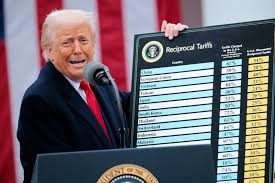
For years, the U.S. was the obvious play: strong economic growth, deep capital markets, and reliable returns across public and private assets. But Trump’s sweeping trade war, including 10% tariffs on dozens of countries and a 145% levy on Chinese goods, is upending the math for some of Canada’s top asset allocators.
At the same time, geopolitical fallout is forcing European countries like Germany to boost defense and infrastructure spending, which could lay the groundwork for stronger long-term growth, even if near-term uncertainty remains high.
“There’s been some interesting reinvigoration of the range of possibilities and outcomes that could happen in Europe,” said Aaron Bennett, chief investment officer at the University Pension Plan (UPP).
“As the continent’s economy moves from relatively slow growth to higher growth, certain asset classes may become more appealing, such as infrastructure, real estate and private credit.”
UPP, which manages $11.7 billion, is exploring niches in European private credit—particularly in less crowded corners of the market like asset-backed lending. Roughly 42% of UPP’s portfolio is in fixed income, with another 6.8% in private debt as of year-end 2023.
Ontario Teachers’ Pension Plan, Canada’s third-largest pension fund with $266.3 billion under management, is thinking along similar lines.
“I quite like the idea of being brave and bold and investing in areas where other people don’t want to go because that means there’s less competition and potentially the chance to make better choices at lower prices,” said Jo Taylor, CEO of Ontario Teachers’, in a recent interview. “We are looking at places in Europe to invest across all of our asset categories.”
As of December, Teachers’ held 33% of its assets in the U.S. and 17% in Europe, the Middle East and Africa (EMEA).
While private credit has ballooned to a US$1.6 trillion market globally, UPP’s Bennett warned that many pockets of the space haven’t gone through a full credit cycle yet. Still, he sees opportunity in fragmentation.
“There’s a lot of segments where a lot of capital is rushed into it,” he said, “but there’s also segments where we’re seeing ongoing fragmentation and really interesting opportunities.”
For Canadian pensions, the bet is that Europe’s next chapter — driven by capital spending, defense policy shifts and post-crisis reforms — could offer returns that rival or exceed those in more crowded U.S. markets.
And for now, the appetite to look beyond traditional comfort zones seems to be growing.